Mold Removal in Tule Springs, NV
Tule Springs is the far northwest edge of the valley, where Las Vegas and North Las Vegas meet the Upper Las Vegas Wash and the fossil beds. The name covers the neighborhoods around Floyd Lamb Park, the 680-acre former ranch and state park on the National Register since 1981, and the newer subdivisions built since 2015 along the Beltway and Grand Teton Drive. The houses are a mix of half-acre ranch properties from the 1980s and 1990s and tight new two-story stucco on slabs.
The springs that gave the area its name are long dry at the surface, and the modern mold source is a fitting, a pan, or a line inside the house. On the older ranch lots it is also a well pressure tank, a softener, or an irrigation main that froze.
Homeowners in Tule Springs reach an independent local mold provider through this site's phone line. That provider meters the house, writes the scope, and does the work. We put the call through.
Tule Springs mold removal, old ranch lot or new tract
A dark patch behind the refrigerator or under the kitchen sink is black mold removal. A ceiling stain under a second-floor bath in a new house is mold removal. A wet wall behind a well tank or a softener is the same removal service with the meter on the slab edge.
The ranch that became a park
Floyd Lamb Park at Tule Springs keeps the 1940s ranch buildings, the ponds, and the peacocks descended from the ones a 1940s owner brought in, and the neighborhoods that grew up around it took its name.
Call (725) 353-7567 and tell us what you see. We put you through to a local mold provider serving Tule Springs.
Services Available in Tule Springs
Mold Removal
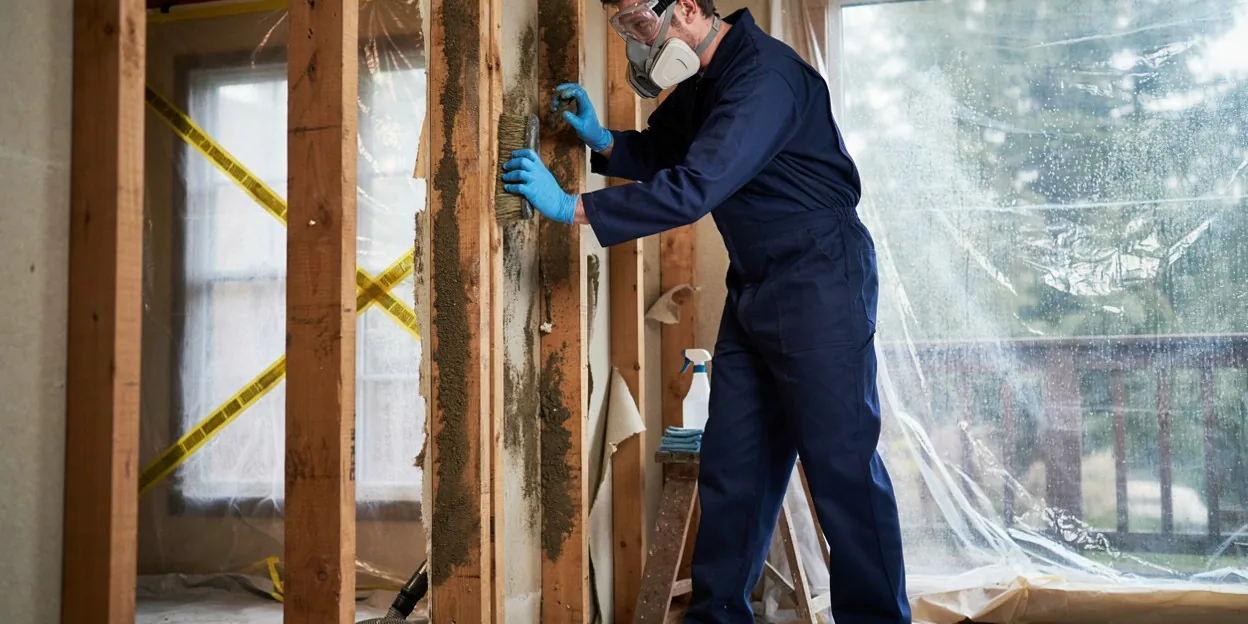
Growth on drywall under a second-floor bath, behind a kitchen sink, or along a slab-leak wall: room sealed, wet board cut to the meter mark, framing cleaned and dried.
Black Mold Removal
A dark patch handled by where the water went, not what shade it is: containment first, porous material out, hard surfaces cleaned, the source fixed before closing.
Whole-Home Mold Remediation
A supply line that ran for weeks in a shut-up house, or storm water across the slab, mapped room by room and worked in zones as one project.
HVAC Mold Cleaning
Coil, pan, drain line, and plenum cleaned when the attic air handler sweats through a North Las Vegas summer and the house smells sour at startup.
Bathroom Mold Removal
Growth behind a vanity, under a shower pan, or on a fanless ceiling, removed after the drain or supply leak feeding it is repaired.
Attic Mold Remediation
Sheathing and truss growth from a sweating duct, a failed roof vent, or a flashing leak, cleaned and treated once the moisture path is closed.
Mold Odor Removal
A musty smell in a house that looks dry, traced with a meter to the wet pad, plate, or cabinet back, then removed and treated at the source.
Mold Damage Repair
Drywall, texture, baseboard, insulation, and cabinet bottoms rebuilt after removal, once the slab and framing read dry and the leak is fixed.