Mold Damage Repair in North Las Vegas, NV
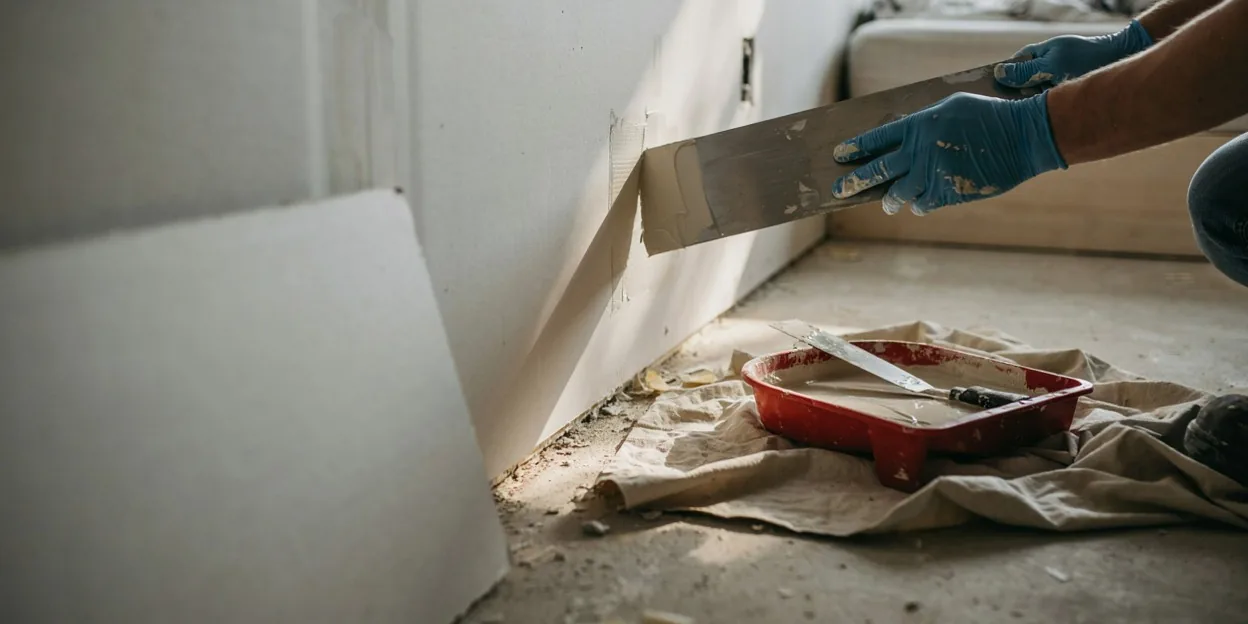
The removal crew has left. There is a four-by-six hole in the family room ceiling with the joists showing, the kitchen cabinet has no floor, and the baseboard is gone along two walls of the hall. The air movers are off and the moisture log says dry. Now you need the house put back. This site connects you by phone with an independent local provider who does mold damage repair in North Las Vegas and across Clark County.
Rebuild starts with the moisture log, not the drywall order
Nobody hangs a sheet until the framing and the slab have been read dry and the leak that started it has been repaired by a plumber, a roofer, or an HVAC tech. The crew reviews the removal scope and the final moisture readings, confirms the repair, and then writes the rebuild scope as its own document: what goes back, in what order, and who is doing each trade.
In North Las Vegas that document is also what the permit desk wants to see. Drywall alone rarely needs one; moving plumbing, electrical, or framing does.
Keep the hole open until the readings say dry
Do not let anyone close the ceiling or the wall to make the room look normal before the readings are in. A ceiling closed over a joist that still reads wet grows mold again behind new paint. Keep the removal scope, the moisture log, and the photos together; your adjuster and the rebuild crew both need them.
Decide now whether you want the room put back as it was or changed. A cabinet floor, a vanity, or a tile shower surround is easier to change while it is already out.
Ceiling, wall, floor, and cabinet work, in that order
The rebuild runs top down. Ceiling drywall is hung, taped, and textured to match the existing orange-peel or knockdown finish common in valley houses. Wall drywall follows, then insulation where a wall was opened, then baseboard and paint. A subfloor cut out around a toilet flange is patched and the flange reset before the floor goes back. Cabinet floors and toe kicks are rebuilt, or the cabinet box replaced if it swelled.
Where carpet and pad came out, new pad and carpet are stretched in; where laminate came up, the slab is checked once more before a new floor is floated. The removal that preceded all of this is mold removal or, across several rooms, whole-home mold remediation. Equipment that was part of the problem is covered under HVAC mold cleaning.
Texture matching, two-story subfloors, and the permit desk
Valley houses from the 1990s on carry a sprayed texture that has to be matched or the patch shows from across the room, and the 1950s to 1970s block houses around Downtown North Las Vegas often have plaster or a hand trowel finish that takes more care. In the two-story houses north of Craig Road the rebuild usually includes a section of second-floor subfloor and the ceiling below it, so the plumber, the drywall crew, and the flooring crew have to be scheduled in sequence.
Nevada has no mold license, but the rebuild is plain contractor work, and the company doing it should hold the right classification with the Nevada State Contractors Board. Inside city limits the permit runs through North Las Vegas Building Safety, in Sunrise Manor through Clark County, and in Centennial Hills or Lone Mountain through the City of Las Vegas. The provider pulls it. Rebuild costs are usually a separate line on your claim from removal, and the adjuster reads them that way.
Calling about putting a North Las Vegas house back together
Have the address, the removal scope, and the last moisture readings. Say which rooms are open and whether the leak has been repaired and by whom. Call (725) 353-7567.