HVAC Mold Cleaning in North Las Vegas, NV
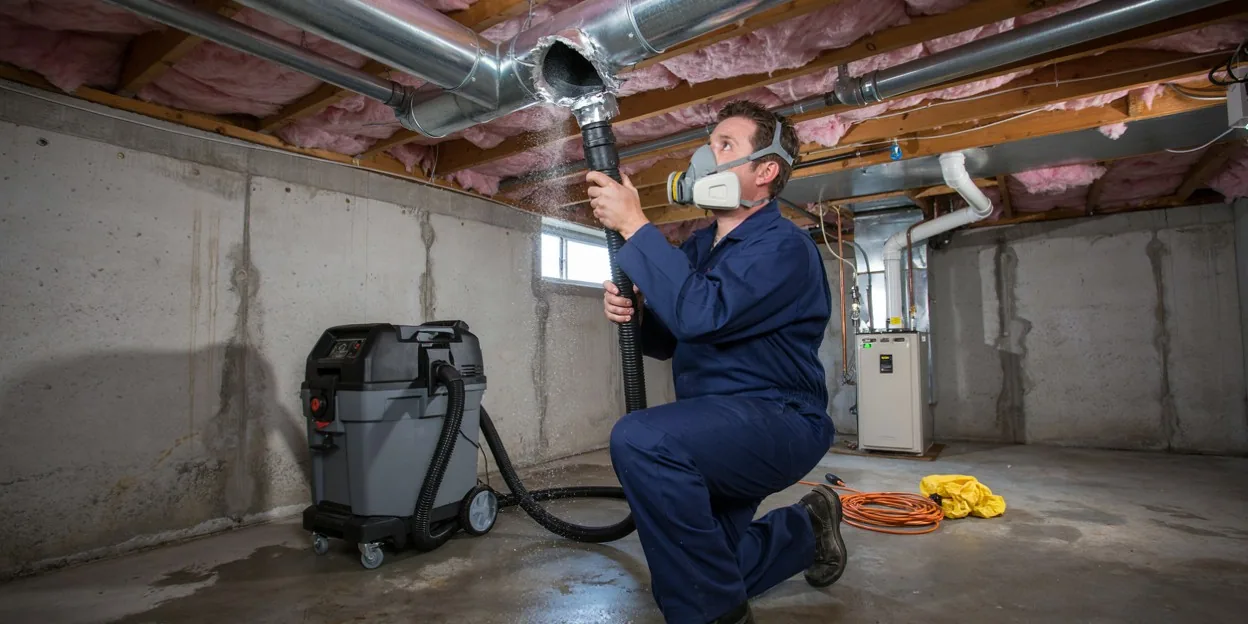
Every time the air conditioning kicks on there is a sour, dirty-sock smell for about a minute, and then it fades. It started in June. Last week you noticed a damp patch on the hallway ceiling right under the attic hatch, where the air handler sits on its platform. This site connects you by phone with an independent local provider who does HVAC mold cleaning in North Las Vegas and across Clark County.
The crew goes into the attic before they touch a vent
The smell at startup comes from a wet coil, a wet drain pan, or wet insulation in the plenum, and the blower pushes air across it. So the first stop is the attic. The crew pulls the access panel on the air handler and looks at the evaporator coil, the primary and secondary drain pans, the condensate line, and the inside of the supply plenum. They meter the platform, the insulation around it, and the ceiling drywall below.
A clogged condensate line is the usual finding. The primary pan backs up, the secondary pan catches some of it, and the rest soaks the platform and the ceiling under it. The attic hits 140 degrees in July, so anything wet up there stays warm and wet.
Switch the fan to auto and stop running the system if it is dripping
Set the thermostat fan to auto rather than on, so the blower only runs when the compressor does. If water is actively dripping onto the ceiling, shut the system off until someone has looked at the pan. Do not spray anything into the registers; a fragrance or a disinfectant in the ducts covers the smell for an afternoon and does nothing about the wet pan.
Note which rooms smell strongest. Supply runs near the air handler carry the smell first, and that helps the crew decide how much of the duct system needs attention.
Coil, pans, line, plenum, and the ceiling under them
The coil is cleaned, the pans are cleaned or replaced, the condensate line is cleared or rerun, and the float switch that should have shut the system down is tested or added. Wet plenum insulation is removed and replaced, and the inside of the supply plenum is HEPA vacuumed and wiped. Flex duct that has gotten wet inside is usually replaced rather than cleaned.
Then the crew deals with the ceiling. Wet drywall under the platform is cut out to the meter mark inside containment, the joists and the platform are cleaned and dried, and that part of the job becomes mold removal. If the overflow has also wet the roof sheathing or the trusses around the unit, that is attic mold remediation. Patching and texturing the ceiling is mold damage repair.
Attic equipment in houses built since 1990
Almost every North Las Vegas house built from Eldorado onward puts the air handler in the attic, where the condensate line runs to a drain that clogs with the algae a warm, wet line grows. Older houses around Downtown North Las Vegas and the Cheyenne corridor often have a package unit on the roof or a closet furnace with the cooler drain plumbed into it, and the leak there shows up on a closet floor instead of a ceiling.
The ducts themselves are not automatically the source, and a crew that quotes a full duct cleaning before looking at the pan has skipped a step. Nevada has no mold license; the provider represents its own training, and HVAC repair and ceiling rebuild are licensed trades under the Nevada State Contractors Board. A pan overflow is usually a sudden event under a homeowners policy, but the adjuster decides, so keep the date you first noticed the drip.
Calling about a smell at startup in North Las Vegas
Have the address, where the air handler sits, and when the smell began. Say whether you have seen water on a ceiling or a closet floor near it. Call (725) 353-7567.