Mold Removal in Nellis AFB, NV
Nellis Air Force Base fills the northeast corner of the valley on about 11,300 acres, eight miles from downtown Las Vegas. It opened in 1941 as the Las Vegas Army Airfield gunnery school, took its current name on April 30, 1950, for Lieutenant William Harrell Nellis, and today hosts the 57th Wing and the Red Flag exercises. The families attached to it live on base and in the North Las Vegas and Sunrise Manor neighborhoods along Las Vegas Boulevard North and Craig Road, in houses from 1950s ranches to 2010s two-stories.
Military households move often and deploy for months, and that is the mold pattern here: a house or a rental left with the thermostat set high while a toilet fill valve or a water heater runs unattended. A small leak that would be caught in a day becomes six weeks of wet carpet pad under a hall.
Homeowners and tenants around Nellis AFB reach an independent local mold provider through this site's phone line. The provider reads the house with a meter and tells you what it needs; we set up the call and nothing more.
Coming home to a musty house near Nellis
A house that smells in every room after a long absence is whole-home mold remediation, mapped room by room before anything comes out. A ceiling ring under an upstairs bath is mold removal. The carpet, drywall, and baseboard that go back afterward are mold damage repair, and a landlord will want that scope as a separate document from the removal.
The base and the speedway next door
The official Nellis Air Force Base site carries the base's own housing and newcomer information. Just north of the gate along Las Vegas Boulevard, Las Vegas Motor Speedway fills the hotels and the rentals on race weekends, and more than one short-term tenant has found a soft bathroom floor nobody reported.
Call (725) 353-7567 and tell us what you see. We put you through to a local mold provider serving the Nellis AFB area.
Services Available in Nellis AFB
Mold Removal
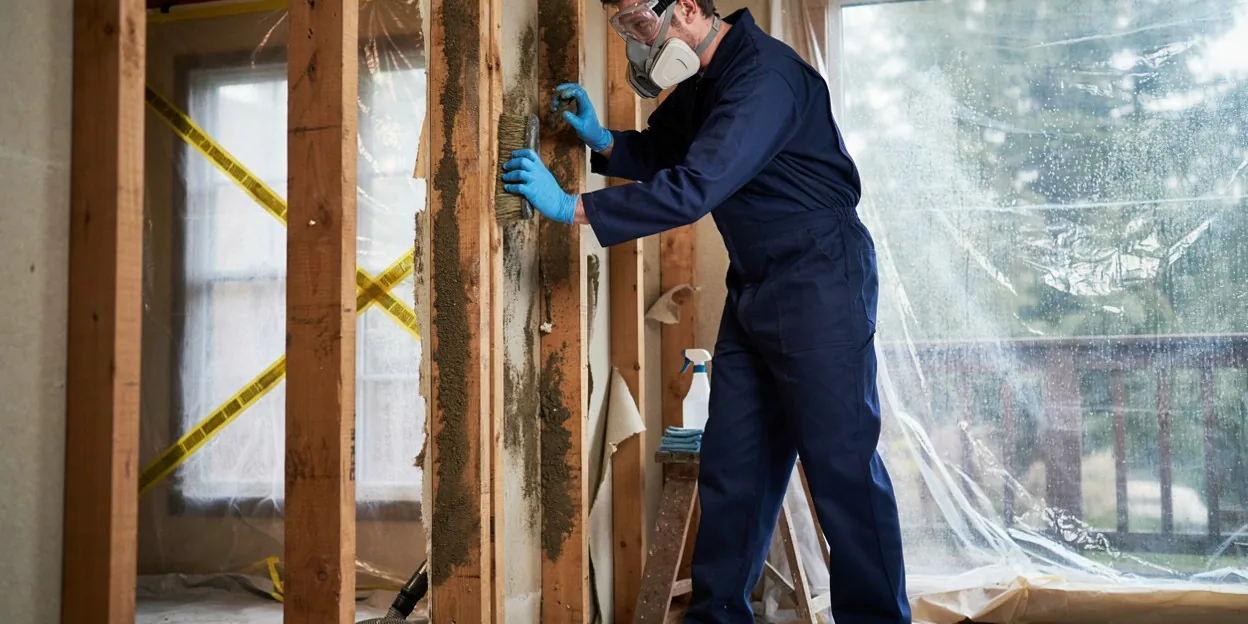
Growth on drywall under a second-floor bath, behind a kitchen sink, or along a slab-leak wall: room sealed, wet board cut to the meter mark, framing cleaned and dried.
Black Mold Removal
A dark patch handled by where the water went, not what shade it is: containment first, porous material out, hard surfaces cleaned, the source fixed before closing.
Whole-Home Mold Remediation
A supply line that ran for weeks in a shut-up house, or storm water across the slab, mapped room by room and worked in zones as one project.
HVAC Mold Cleaning
Coil, pan, drain line, and plenum cleaned when the attic air handler sweats through a North Las Vegas summer and the house smells sour at startup.
Bathroom Mold Removal
Growth behind a vanity, under a shower pan, or on a fanless ceiling, removed after the drain or supply leak feeding it is repaired.
Attic Mold Remediation
Sheathing and truss growth from a sweating duct, a failed roof vent, or a flashing leak, cleaned and treated once the moisture path is closed.
Mold Odor Removal
A musty smell in a house that looks dry, traced with a meter to the wet pad, plate, or cabinet back, then removed and treated at the source.
Mold Damage Repair
Drywall, texture, baseboard, insulation, and cabinet bottoms rebuilt after removal, once the slab and framing read dry and the leak is fixed.